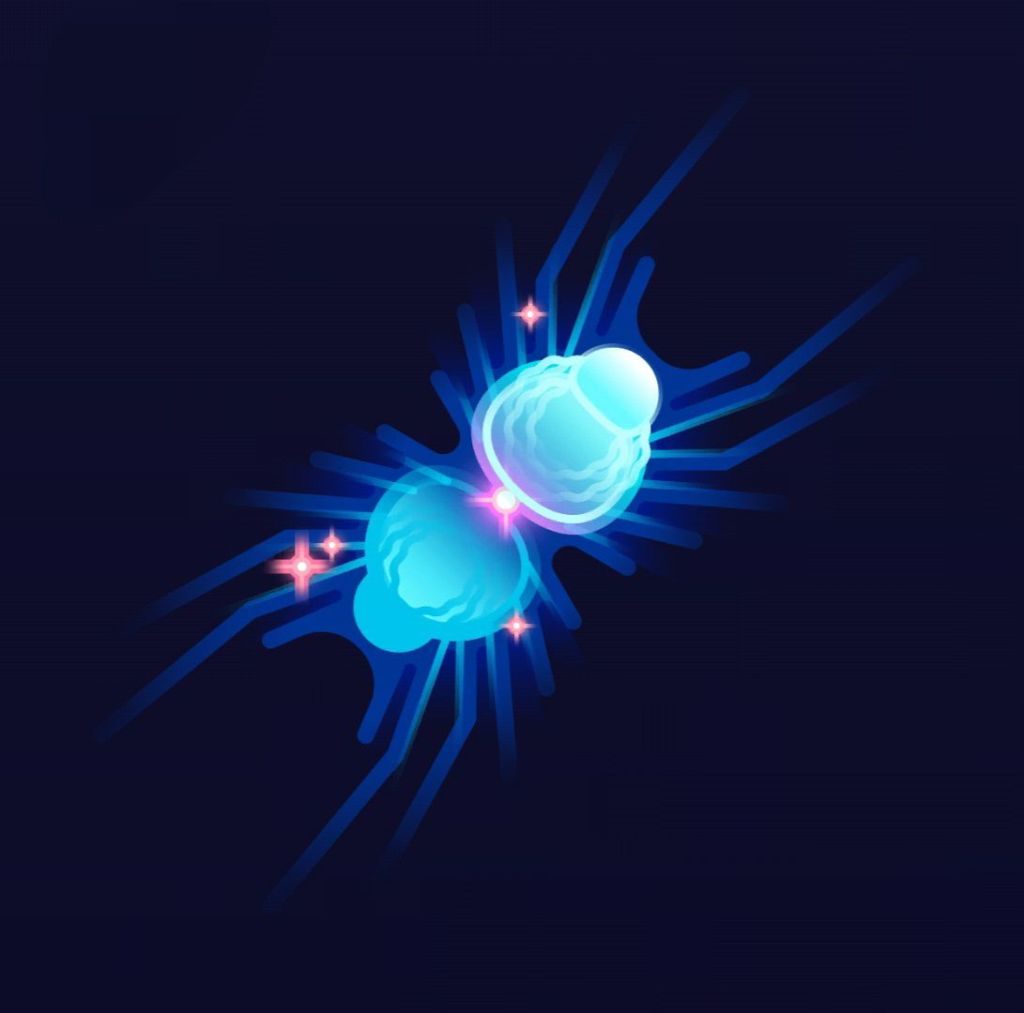
At 2 light years across, the Ant Nebula is big enough to fit about 10,000,000,000,000,000,000,000,000,000,000,000,000,000 ants.
At 2 light years across, the Ant Nebula is big enough to fit about 10,000,000,000,000,000,000,000,000,000,000,000,000,000 ants.
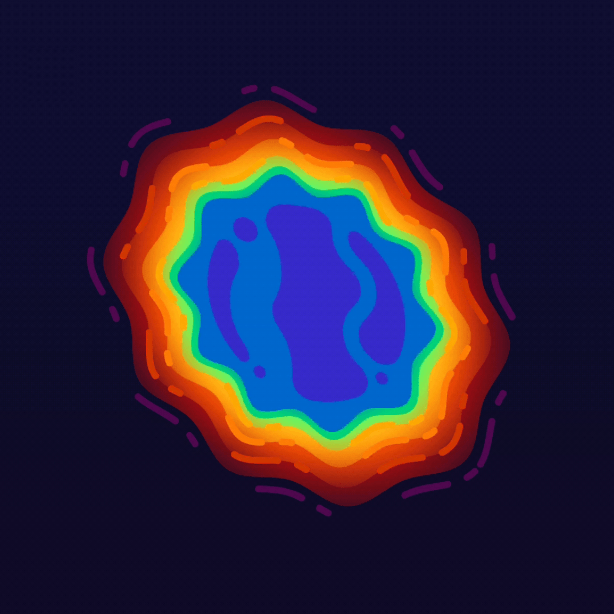
The Ring Nebula was at some point a sun-like star. The remains of that star are today a tiny white dwarf in the middle of a giant eye 2.5 light years across. That means if the original star were the size of a peach, the nebula created by its death is the size of the Earth. It’s a testament to just how much matter is packed into a star the size of the Sun.
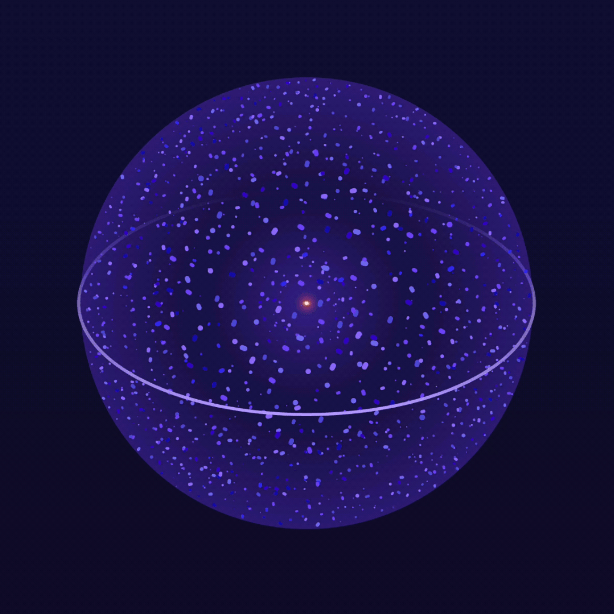
The Oort Cloud is a huge sphere of rocks and dust surrounding the Solar System. It’s hard to explain just how big and far away the Oort Cloud is. If the Solar System is a penny with a diameter of 2 cm, with Neptune a little pinprick circling around the edge of the penny and Earth’s entire orbit so small it just looks like a tiny dot in the center, the asteroid belt is a sharpened—pencil-drawn thin circle in the center of the penny with a diameter of about 2 mm.
The Kuiper Belt is a flat circle around the outside of the penny like Saturn’s rings, drawn as thick as it would be if you painted it with your fingertip — seems small, but it would take 350 years for an airplone to pass through it. The Oort Cloud isn’t a disk but a sphere, starting about 30 cm or 1 ft away from the penny in all directions, but continuing outward for 30 m or 100 ft in all directions. About the size of Disney World’s Spaceship Earth.
A parsec, a giant unit of distance derived from trigonometric measurements, is equal to about 31 trillion km, or 3.3 light years, or 210,000 times the approximate mean distance between the Earth and the Sun. This is just under the distance between us and the nearest star. If a parsec were a km, the distance between Earth and Sun would be just under 5 cm.
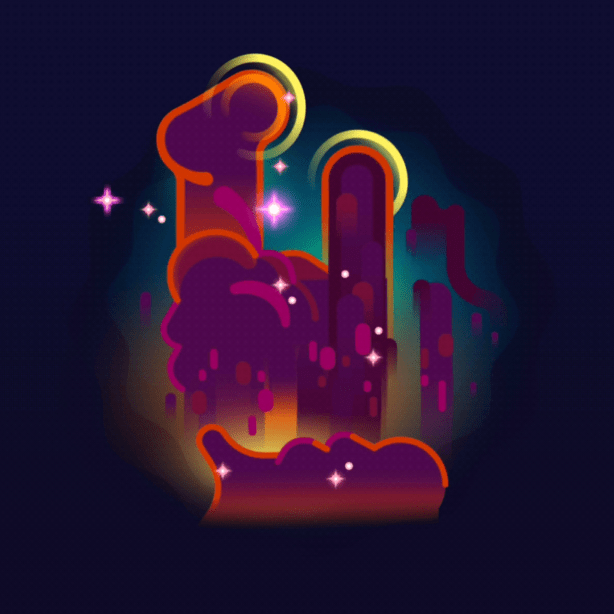
The Pillars of Creation, vast columns of cosmic dust and gas in the Eagle Nebula, are so inconceivably huge that if you started at the tip of the left pillar and flew down in an airplane, it would take 4.5 million years to get to the bottom of the pillar.

If the Sun were a basketball in New York City, Proxima Centauri would be a golf ball in Warsaw, almost 7,000 km away. This speaks to how empty a galaxy really is – not only because the stars are so far apart but because there’s so little in between them that we can see so many in our sky at night.
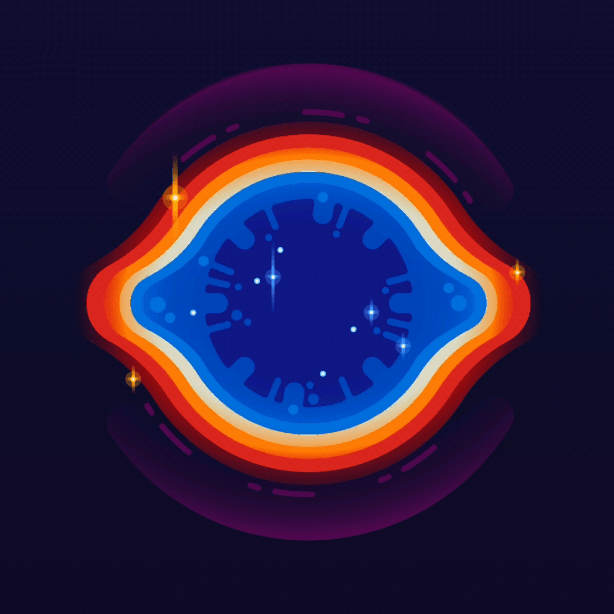
Staring us all down from 655 light years away, the Helix Nebula is the graveyard of a solar system that may have been a lot like ours. Today, what was once the solar system’s sun is now a white dwarf about the size of the Earth. Creepily, some comets still orbit around inside the nebula, like zombies wandering around a cemetery.
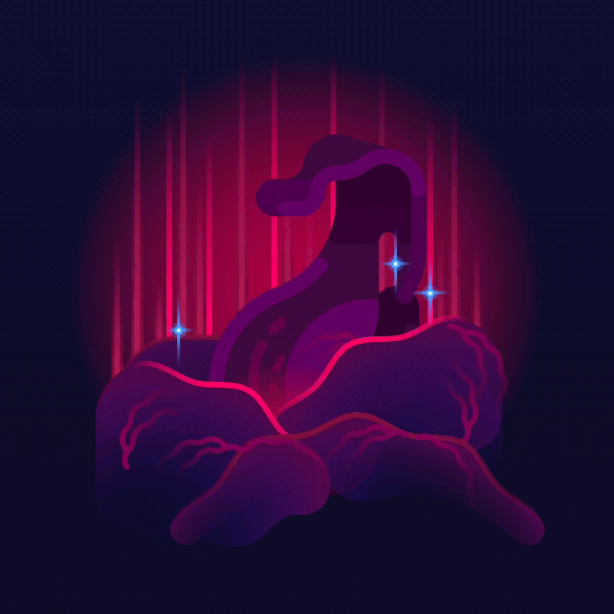
The Horsehead Nebula is one of the most beautiful natural spectacles in the Universe. Our only objection is that scientists obviously misnamed it — we don’t know about you, but we clearly see a duck in that main cloud rather than a horse head. The pink glow in the background is ionizing gas that is illuminated by a nearby star. East of the Duckhead Nebula there is a very active star formation region, containing very young stars with masses similar to our Sun.
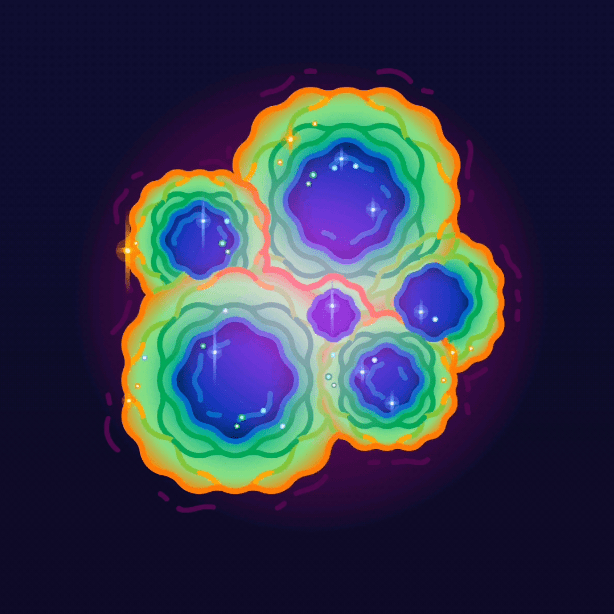
In 1840, the highly British 3rd Earl of Rosse noted this object through his 0.9 meter—long telescope and sketched out what he saw. The drawing looked like a crab and so the Crab Nebula’s nome came to be. Eight years later, the 3rd Earl of Rosse had upgraded to a double—size telescope and was like, “oh wait no it doesn’t look like a crab” but no one cared, so that was that. The Crab Nebula is 6,500 light years away from us and is the fallout from a supernova that happened in 1054 AD. The effects of the supernova are still so powerful that the nebula keeps expanding at an incredible rate of about 1,500 km/s.
This cone—shaped nebula, 2,700 light years away from us and a neighbor of the festive Christmas Tree Cluster, stands an outrageous 15 light years high. If the Cone Nebula were the height of a 50—story skyscraper, our Solar System would be the size of a 10 cm drink coaster and our Sun would be the size of a silt particle, far too small to see with the naked eye.

 Keishinrei