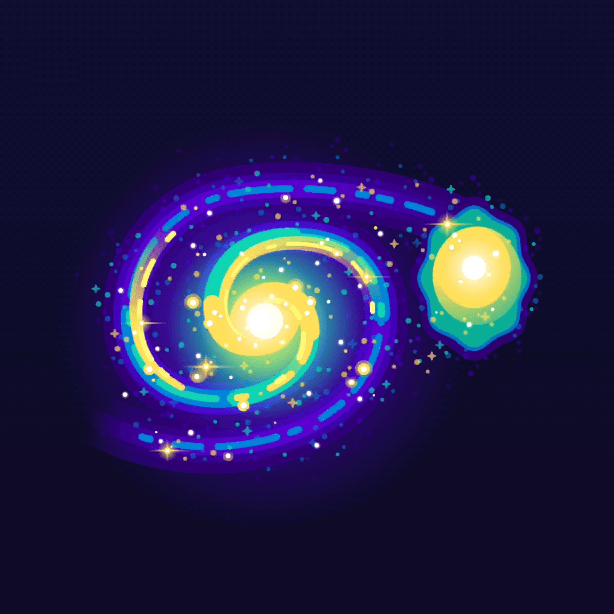
This galaxy could have been the one that affected the fate of our Milky Way disk! We know that the Milky Way had three intense phases of star formation — apparently each of them happened when Sagittarius passed through it. The relatively stable gases and dust of the Milky Way were splashed around by the disruption, creating denser regions which then created new stars much faster. It seems like our Sun was actually born during the first of these episodes. We all owe Sagittarius Dwarf a drink.
This satellite dwarf galaxy is almost twice as big as its sibling, the Small Magellanic Cloud. They were both named after the explorer Magellan. If he had tried to cross this cloud, it would have taken him around ten trillion years. Magellan crossed the Atlantic and Pacific Ocean instead and almost circumnavigated the world — not bad either.
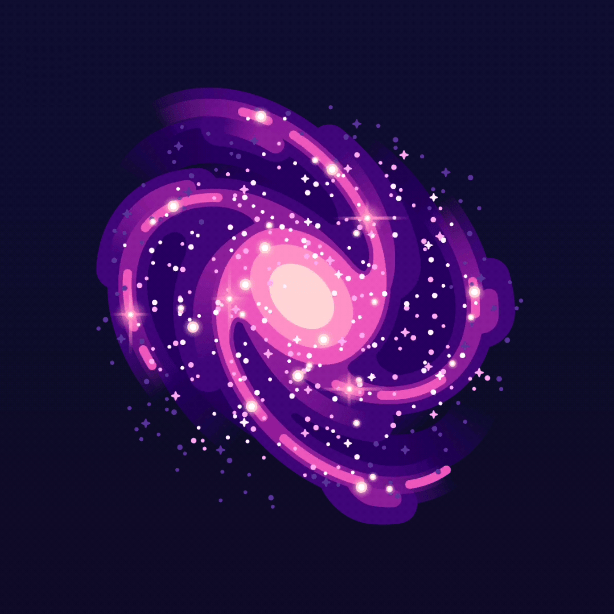
Many people think the black hole in the center of the Milky Way holds the galaxy together, sort of like how the Sun holds the Solar System together with its gravity. Strangely enough, not only is this black hole less than 0.1% of the mass of the galaxy, it’s not even at the center of stars’ orbits! When we map the orbits of stars in our galaxy, we find that their orbital center is an empty spot almost 27,000 light years away. But that doesn’t really matter, even if it’s not at the center of the galaxy it’s still at the center of our hearts.
Many galaxies make stars, but this one is a massive star factory. Galaxies with high star formation rates like these are called starburst galaxies. NGC 3310 has hundreds of star clusters — each of them triggers the formation of around a million stars. They come in all shapes, sizes, and especially colors!
Looking at the colors helps researchers learn the age of ca star. Star clusters with lower stellar temperatures glow in red, which means that they have been around quite a while — at least several millions of years. Younger stars are blue since they have higher surface temperatures and are still full of fuel. NGC 3310 has many of these red and blue clusters with ages ranging from one million to more than a hundred million years.
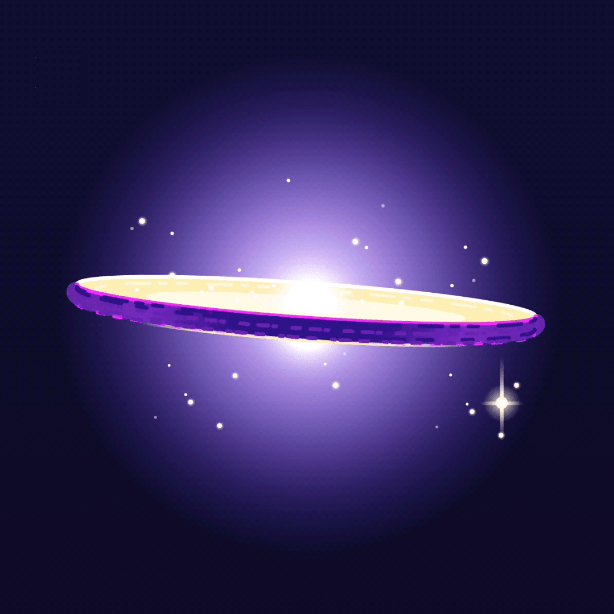
Owing its name to the thick dust lanes encircling its white globular center, this huge galaxy is 28 million light years away from us. It has a mass equal to 800 billion Suns. If this were an actual sombrero, then our Sun would still only be as big as 1/lOOth of a hydrogen atom in that hat.
The Triangulum Galaxy is about a quarter of the size of our Milky Way, which makes it third place in the Local Group after the Andromeda Galaxy and the Milky Way. It is also home to one of the largest stellar nurseries in all of the Local Group.
The Big Bang theory can satisfyingly explain the creation of the cosmos, but it fails to explain the interaction among various types of energy in the universe. Why did shortly after the Big Bang some elementary particles join to make protons and neutrons? And what made electrons bind to them later to create atoms? Why did these atoms then go on to build glaring stars and vibrant galaxies?
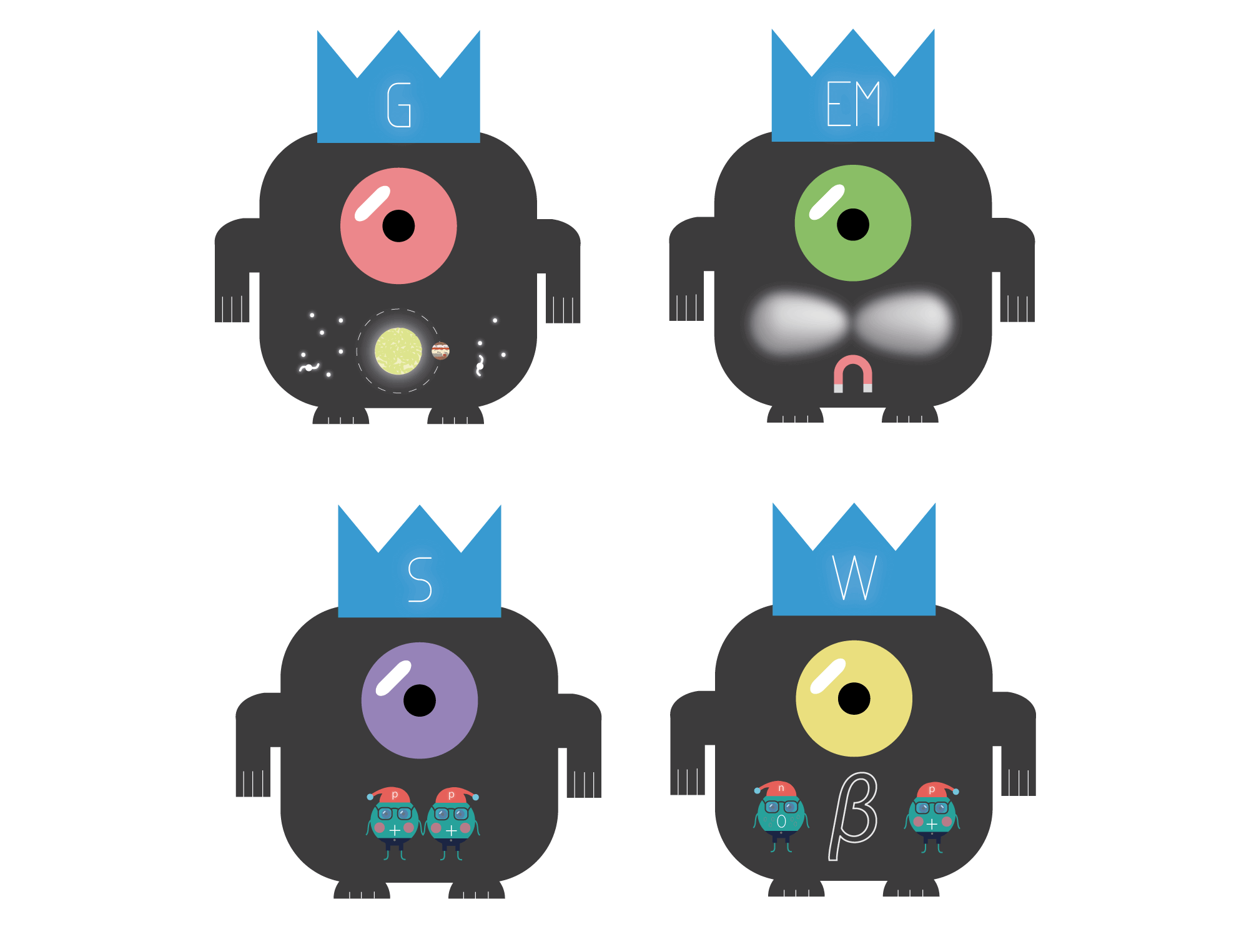
It turns out that all events in the universe can be blamed on four fundamental interactions (four fundamental forces) – gravity, electromagnetism, strong interaction and weak interaction. I am sure everybody has at least a basic overview of the first two forces, the last two, however, might be entirely foreign to some. But it is crucial to understand these interactions, since they govern the whole universe.
Take your own body as an example. First, let us dive deep into the microworld, where we can see the basic building blocks of everything. Your body is, just like everything else in the universe, made up of energy. It is of course present in many various forms, but fundamentally, it is simply energy.
The energy of the human body is concentrated mainly in the form of elementary particles – the same particles that were created just a moment after the Big Bang. These particles then form composite particles – protons and neutrons. But what keeps elementary particles together? The answer lies in the strong interaction. If we jump one level up, we can see collections of protons and neutrons – atomic nuclei. Again, we can blame the strong interaction. Going another level up, we can see electrons, devoutly whizzing around the nuclei. Here, we observe the token of another fundamental force – electromagnetism. Individual atoms then go on to form molecules – electromagnetism shows itself once again.
And finally, unless you are currently at the international space station or reading this text in a distant future on a faraway planet (most likely on Mars, as explained in one of the following chapters), it is quite likely that you are finding yourself on our tiny blue planet. And the only “force” keeping your feet on the ground instead of flying off to space is gravity – another of the four forces.
Our demonstration is over now. We have seen the essence of three of the four interactions using only the human body on Earth. If you are interested in the fourth force as well, you will have to wait a while – it manifests itself the least of the four forces. But now, let us analyse the interactions in detail, one by one. And we will start with the most sneaky and peculiar one – gravity.
The Cartwheel Galaxy is the site of a galactic car crash. A smaller galaxy passed through a larger one and produced shock waves of gas and dust that turned into blue regions, where lots of stars are formed.


 Keishinrei