Distance Voyager 1 to Earth

21.2 BILLION KILOMETERS

Launched in 1977, Voyager 1, along with its friend Voyager 2, were the first probes to collect images of the four outer giants of the Solar System. Voyager 2 is still the only probe to visit Uranus and Neptune.

The cool thing about the Voyagers is that even though their original missions are now long over, they’re still zooming outward. They’re both ridiculously far away now and going super fast. Voyager 1 is the faster of the two, going 38,000 mph or 61,000 km/h — so fast that it would cross the Atlantic Ocean in five minutes. It is about 140 AU away from us as of 2020 and was also the first man—made object to leave the Solar System.

Before they launched, a NASA committee loaded them each up with a time capsule — full of symbols, sounds, and images of Earth — so the probes can one day tell aliens what our deal is. Probably a waste of everyone’s time, but who knows.

Biggest Black Hole

330 BILLION KILOMETERS

The biggest known black hole, TON 618, is thought to contain 66 billion solar masses — that’s two-thirds the mass of the entire Milky Way! In size, its diameter is 2600 AU, or 390 billion km — more than 40 times the diameter of Neptune’s orbit. If TON 618 were the size of the Earth, the Earth would be a 41.6 cm ball next to it, about the size of a typical house globe.

Stars – The Extremes of the Cosmos

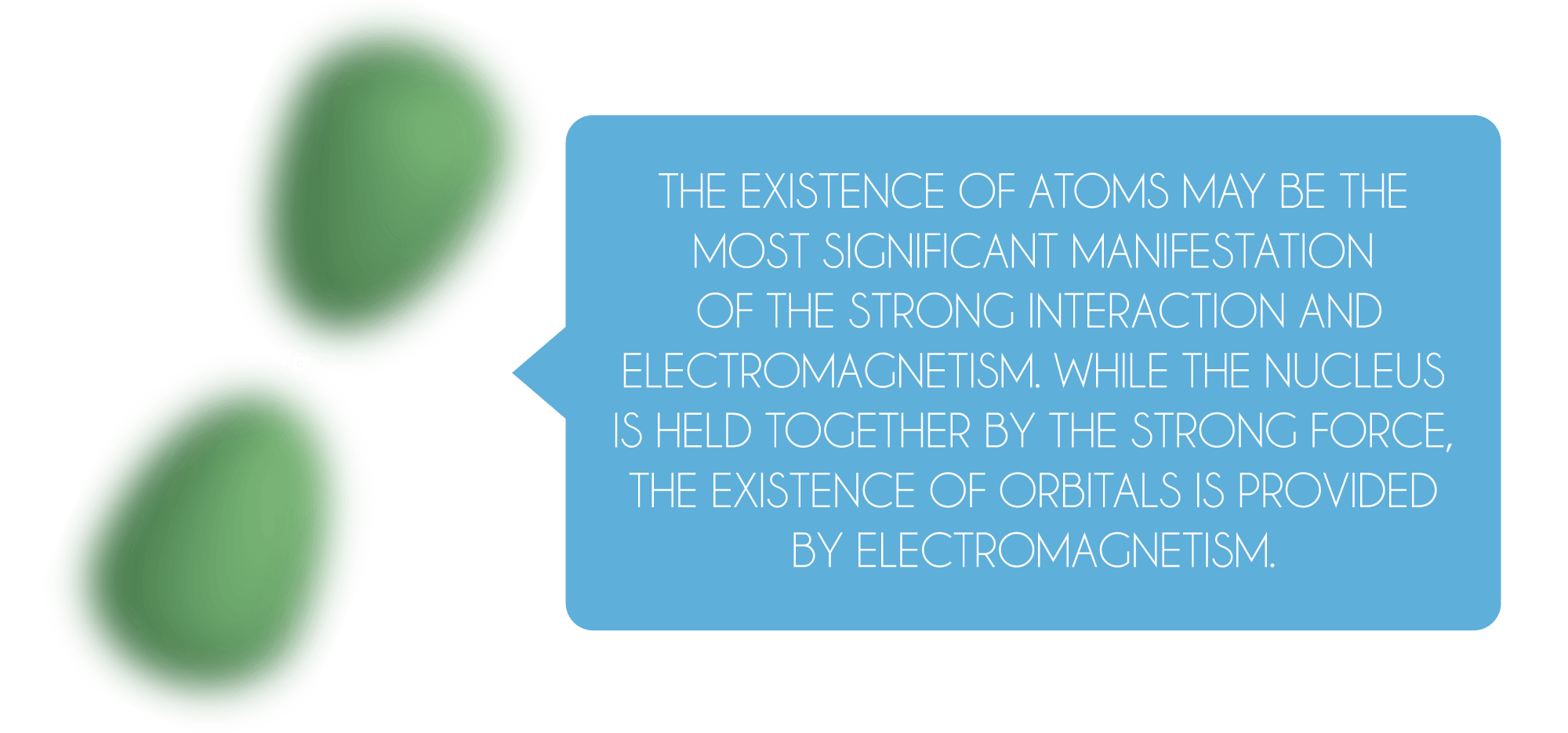
Before we can focus on what happens to the core of a star during a supernova explosion, we first need to become closely acquainted with atoms. As I have already mentioned in previous chapters, each atom consists of a nucleus and a surrounding shell. Protons and neutrons are located in the core, while electrons move randomly around the shell. An important fact is that nearly all energy of an atom is concentrated in its core – protons and neutrons are almost 2000 times more massive than electrons.

Another important fact is that the core is incredibly small compared to the size of the entire atom. For instance, the radius of a hydrogen nucleus is 145,000 times smaller than the radius of the whole hydrogen atom. This means that atoms are mostly empty space. There is an extremely dense and incredibly small nucleus in the centre, surrounded by a nearly empty shell, where an electron occasionally appears.

If we managed to squeeze out all of this empty space from atomic shells, we would get matter so concentrated that the entire human race would fit into the volume of a sugar cube. Luckily, I have good news for those who value their personal space and would not appreciate being squeezed into the volume of one cubic centimetre with seven billion fellow citizens – to squeeze out the empty space from atoms seems to be almost impossible. Electrons in the shells are very solitary particles that they would do anything to keep their distance from other electrons. Therefore, if you wanted to convince electrons to move into the nucleus, you would require truly extreme conditions – and from here, we can come back to our supernova, which is the only known object in the universe that is able to provide such conditions.

The only thing left after a supernova explosion is a tiny astral core. However, there is a huge gravity in such a core – so huge, in fact, that it starts competing with the immense repulsiveness of electrons. Eventually they resign and are squeezed into the core, where they are along with protons turned into neutrons. The entire stellar core therefore turns into a gigantic sphere of neutrons crammed next to each other, held together by the impressive power of gravity. This formation has earned an apt nickname – a neutron star.

Neutron stars are indeed extreme objects. Their density is so huge that a mere teaspoon of their matter would weight an incredible billion tons. Their radius rarely exceeds 25 kilometres, but they might sometimes be even three times more massive than the Sun (and about a million times more massive than the Earth). On top of that, neutron stars spin very rapidly around their axis, often even 500 times every second – a rotation so unimaginably quick that the human eye would by far not be able to perceive it.

It would be reasonable to assume that neutron stars are definitely the most extreme objects of the cosmos – their rapid rotation and incredible density surely support this claim. However, the laws of the universe allow the existence of an even more extreme type of objects. The existence of such objects was predicted by Einstein’s theory of relativity, but even Einstein himself could not believe that they could be found anywhere in the universe. These objects are called black holes.

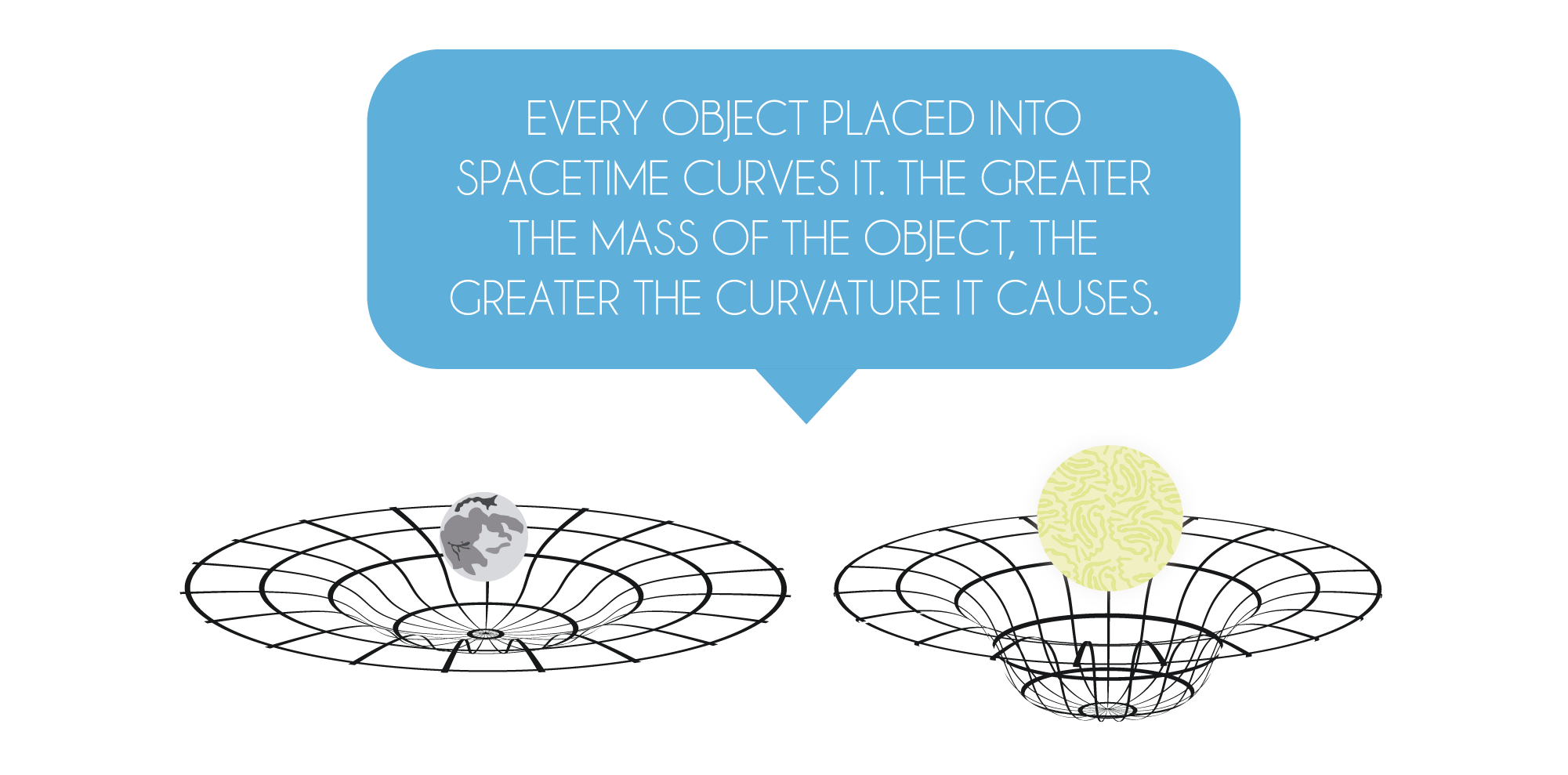
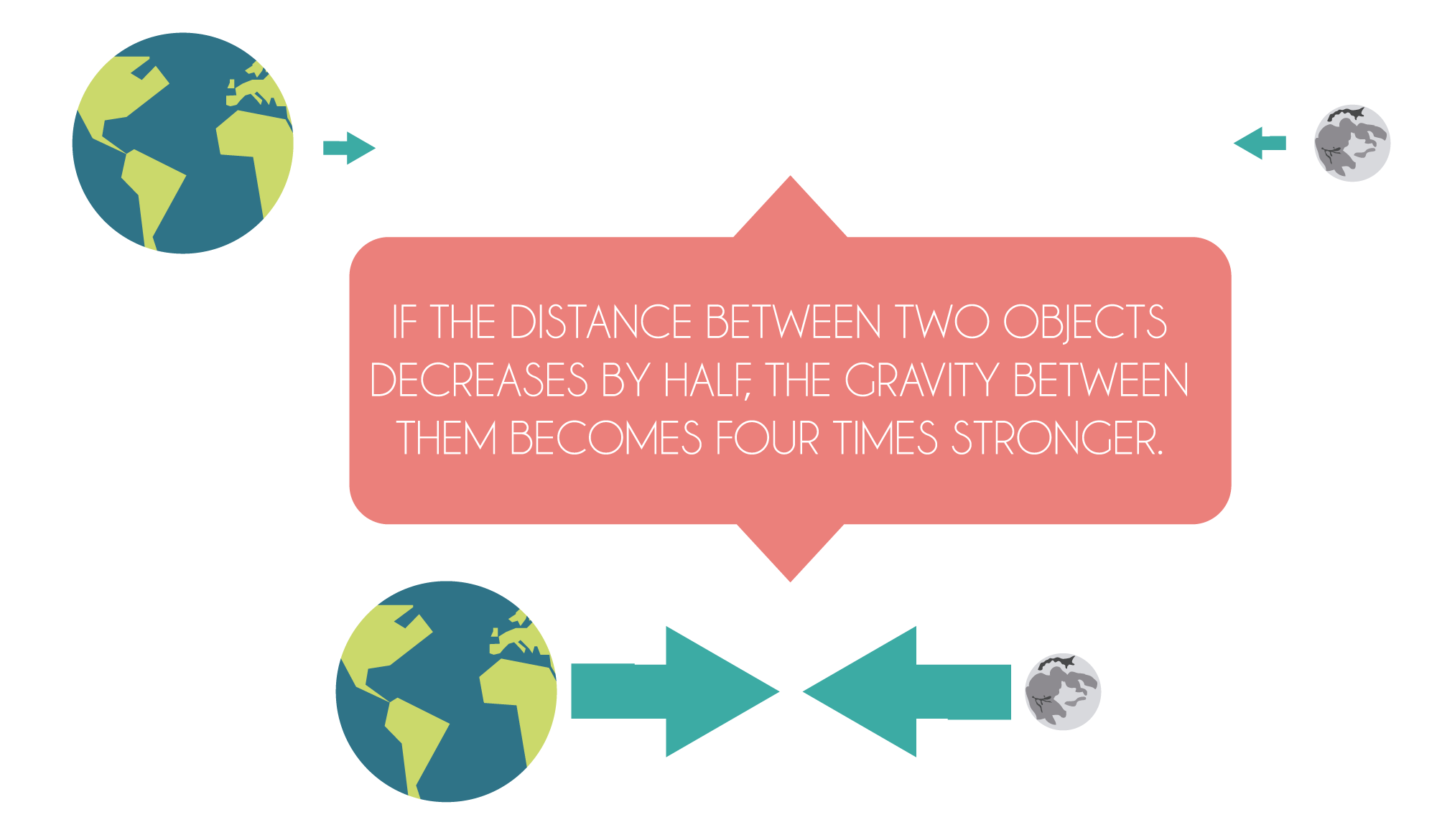
If a neutron star created after a supernova explosion is more massive than three Suns, gravity shows its final domination in the universe. It manages to overcome the immense repulsive force of individual neutrons and squeezes the entire neutron star into an infinitely small space called a singularity. We already know this term from the first chapter – the universe used to be squashed into one such singularity before the beginning of time. But the initial singularity was different – nobody had to deal with its gravitational effect on other objects, since it was located in the middle of nothingness. However, this does not apply to singularities formed during a neutron star collapse, whose gravitational influence on the surrounding space-time is simply gigantic. If we were to use the analogy with a trampoline from the chapter about gravity, where every object placed on the trampoline curves its surface, the singularity could be imagined as an object that simply punctures a hole in the trampoline.

This is not good news for any object coming too close to a singularity. Even light itself, the fastest object in the universe, which is rarely influenced by gravity in a significant way, cannot escape a singularity – any light that whizzes around a singularity is ruthlessly pulled inside. That is also the reason why black holes are formed around singularities. A black hole is simply a region of space where the gravitational pull of a singularity is so strong that even light cannot escape it. That logically gives black holes their black colour – it is just impossible to observe an object that does not reflect any light, since it absorbs all of it. The boundary of a black hole is known as the event horizon. What does space inside of a black hole behind the event horizon look like? Nobody knows. Since no light can escape a black hole, no information revealing its appearance can escape either.

There is however one thing we know for certain – falling into a black hole definitely would not count as a pleasant experience. Imagine you are wearing a spacesuit while floating in the proximity of an event horizon and falling towards a black hole at tremendous velocity. As you draw closer and closer, strange things begin to happen. Once you get precisely to the level of the event horizon, you will get a unique opportunity to see your own body from behind. The light reflected off your body can swiftly circle around the entire black hole and consequently get right into your eyes.

But the fall will not be such fun much longer. The crossing of the event horizon will mean your certain death – no matter how much energy you exert, you will never escape the black hole.

Your distance from the singularity will continue to shrink rapidly. Once you get too close, gravity starts doing weird things to your body. If you fall towards the singularity feet first, gravity acting on the lower part of your body is greater than that acting on your upper part. After all, we can see this effect here on Earth as well. If you are standing right now, your body experiences slightly greater gravity than your head. However, this difference is so incredibly small that we do not even feel it.

But that changes inside of a black hole. The difference in gravity is so immense that your body starts happily stretching towards the singularity. The part of your body closer to the singularity therefore starts acquiring unprecedented proportions. This phenomenon has earned an apt name – spaghettification. Eventually, your body is no longer able to counteract the gravitational pressure, since it is obviously not evolutionary built to sustain a fall into a black hole, and tears apart. Your corpus is first split into two parts, then three, four – before you even know it, you are ripped into individual molecules, atoms and consequently even elementary particles, which are then pulled into the singularity. What happens to them then? Unfortunately, nobody knows.

But before being split into trillions of tiny pieces, you will witness some remarkable events. General relativity says that gravity slows down time. Simply said, if you observe somebody in a stronger gravitational field than yourself, you will be able to see them in slow motion. What is more, they will perceive their time completely as normal – form their perspective, their time does not run more slowly, but your time more quickly. This phenomenon takes place here on Earth as well, which also generates a considerable gravitational field. Time would therefore run fractionally more quickly for a person in interstellar space, far away from other large space objects.

But in the immediate vicinity of a black hole, where an enormous gravitational field is present, this effect is definitely not negligible. Your time would slow down in an incredible way near a black hole. Every single of your seconds would be equal to many millions of years here on Earth. The entire age of the universe would therefore literally zoom past your eyes. But after this fantastic experience, the aforementioned dismemberment would follow.

Clownface Nebula

6.4 TRILLION KILOMETERS

NGC 2392 is also referred to as Clownface Nebula or formerly Eskimo Nebula, because a white dwarf is located in the middle of the nebula, surrounded by a bright bubble of material moving away from the star. This makes the nebula look like a face with a parka around it. What’s interesting about this nebula is that the dying star in the middle is very similar to our Sun, so it can serve as a perfect reference to the ultimate fate of our Sun in about five billion years.

Hourglass Nebula

6.8 TRILLION KILOMETERS

Shaped like a giant hourglass with an eye in its middle, the Hourglass Nebula is one of the most beautiful objects that can be observed from Earth. The eye in the center is a red giant, emitting high—energy solar winds that are spread around the star in two flattened rings. These ejected particles emit light as a result of being trapped in the star’s complex magnetic fields.