Once the first violent fraction of a second was over, the evolution of the universe slowed. A lot. The key expressions for the following development of the cosmos are cooling, expansion and the synthesis of simpler structures to create more complicated ones. About a millionth of a second after the Big Bang, the temperature of the universe decreased to such an extent that the simplest particles started joining to create more complicated particles – the first protons and neutrons came into existence. A few minutes after, these particles started clumping together and the first atomic nuclei saw the light of day. This process is called the nuclear fusion.
The temperature of the cosmos was approximately one billion degrees Celsius back then – still a breath-taking value but ridiculously small compared to the prior values. Just 20 minutes after the Big Bang, the temperature of the universe was no longer high enough to sustain nuclear fusion. The creation of new elements ceased for several million years – until the first stars initiated it again.
When the fusion stopped, three quarters of all matter in the universe formed hydrogen nuclei (the lightest element), the last quarter made up helium nuclei (the second lightest element). However, it took another 380,000 years before electrons bound to them, which flooded the cosmos with the first atoms.
380,000 years after the Big Bang, a new epoch of the universe began. Photons could finally move freely through space-time due to the creation of atoms. But what is more, a seemingly innocent force that was present almost from the very beginning slowly started to gain power – gravity. One of the following chapters is dedicated to this fascinating interaction, for now you only need to know one thing – every single object in the universe is attracted to every single other object, while the amplitude of the force with which they attract is proportional to the square of the distance between the two objects. What does it mean? Simply said, if two objects are one meter apart, the gravitational force between them is four times as great as if they were two meters apart.
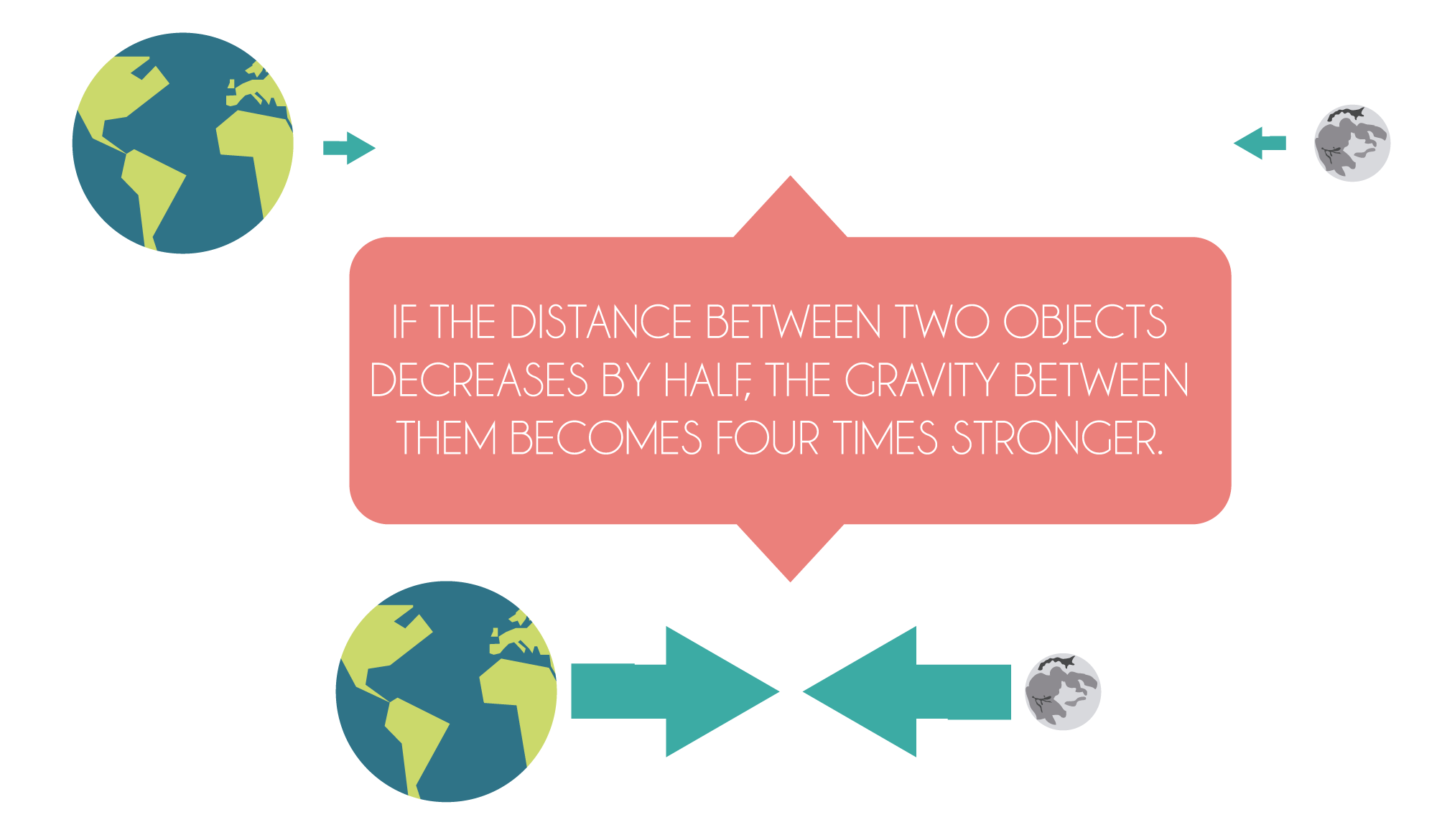
The gravitational force, even though it is the weakest of the four fundamental interactions (again, you will have to wait for the following chapter), has become the unquestionable dominant force of the universe. Right after the Big Bang, tiny disproportions in the distribution of matter were produced due to vacuum quantum fluctuations. Imagine spilling a handful of sugar on a paper. It is hugely unlikely that each section of the paper would contain the same number of sugar grains. On the contrary – some spots would contain large clusters of sugar, whereas others would hold no sugar at all. And something similar happened to the early cosmos – some sections of space-time simply contained more energy than other sections.
In places with a higher concentration of energy, more elementary particles, more atomic nuclei and eventually more atoms were created. This was crucial for the following development of the cosmos. Were it not for the early fluctuations causing disproportions in energy density, each bit of the universe would contain an identical amount of matter and gravity would never be able to show itself.
It is as if you tried to move a cube but you would keep pushing all faces with exactly the same force – the cube would stay in place no matter how large the force would be. However, if you applied just a little more force to one of the faces, the cube would start moving in the direction of the force. To some extent, this is what happened in the 380,000 years old universe. The parts of the cosmos with a higher concentration of matter gravitationally affected each other more and began happily attracting – the first nebulae saw the light of day.
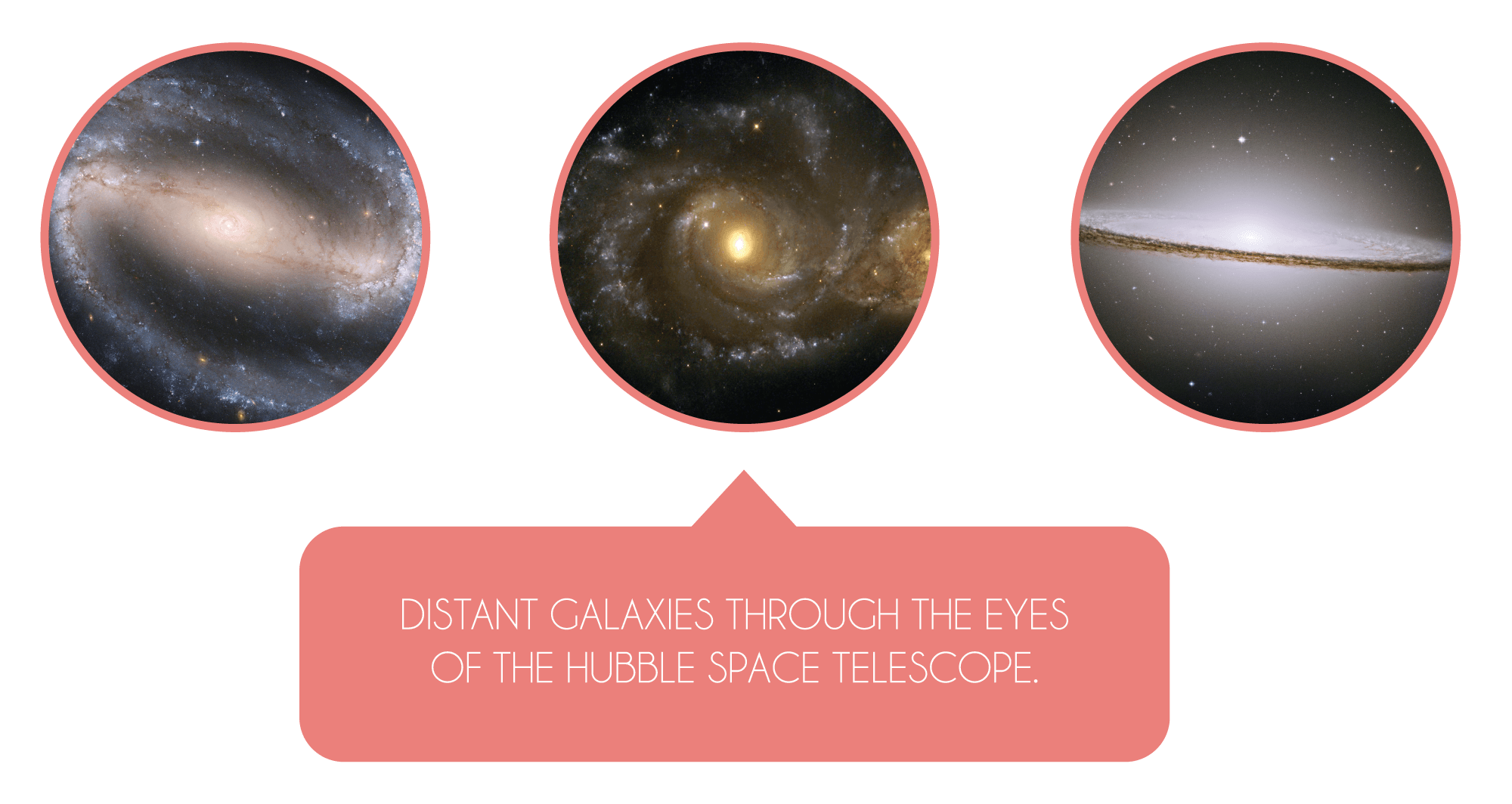
Then, these nebulae were becoming denser and denser due to gravity and the temperature in their cores was gradually increasing. After several hundred million years, the temperature in their hearts was so high that nuclear fusion was ignited – the first generation of stars was born. These stars then went on to clump together into enormous formations called galaxies, which exist to this day and often contain up to billions of astral residents.
All that time, however, stars were doing something immensely important – they transformed simpler elements like hydrogen and helium into more complicated ones. The universe beheld elements like carbon, oxygen and iron for the first time. But every star has to die eventually. The early stars were usually gigantic and ended their lives in massive explosions, during which they ejected an enormous amount of material into the surrounding space.
The material then went on to create the next generation of nebulae and the entire process repeated – the nebulae formed new stars which in turn built more and more complicated elements. These were once again expelled into the adjacent vacuum. However, some of the elements started forming new structures, which had never existed before, called planets – smaller cosmic objects in which nuclear fusion is not ignited. Planets usually revolve around a parent star. Such a star was essential for the early planets, since it supplied them with necessary energy, which allowed various chemical reactions to occur. These reactions then enabled the formation of the first amino acids. Then, after many years of effort, at least one of the planets created the most complicated known entity in the whole universe – life.


 Keishinrei